CDC Says Don’t Eat Raw Oysters

Have a Healthy New Year Celebration:
CDC Says Don’t Eat Raw Oysters

The Centers for Disease Control and Prevention (CDC) has issued a warning against eating raw oysters, as a multi-state Salmonella outbreak has been reported linked to the consumption of raw oysters. The highest number of illnesses were reported in New York and Pennsylvania, with illness reported in New Jersey as well. A total of 64 cases have been reported in 22 states, resulting in 20 hospitalizations.
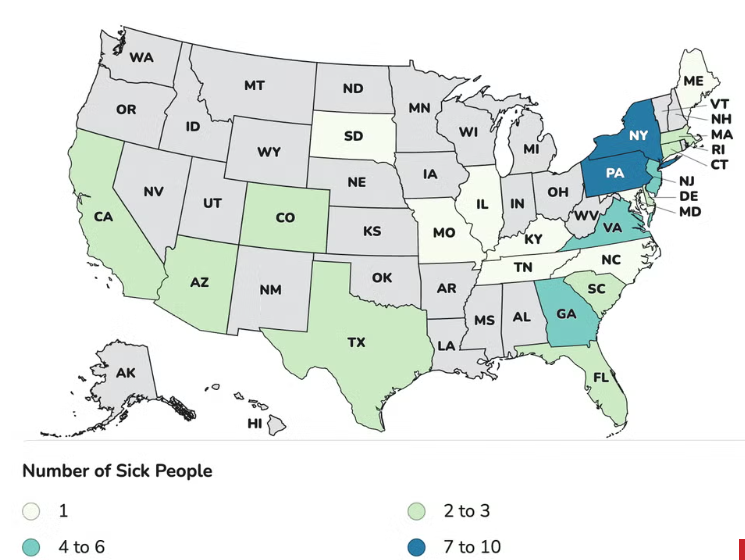
Source: CDC

The CDC noted that eating cooked oysters is safe, as cooking destroys the bacteria. CDC offered these tips for cooks:

  • Do not let raw seafood, its drippings, or its juices contaminate other foods.
  • You cannot tell if an oyster has germs by looking at it.
  • Hot sauce and lemon juice do not kill germs.

Cooking methods include cooking oysters in the shells until they open (discard oysters that do not open) or outside the shells, to an internal temperature of 145 deg. F.

Symptoms of Salmonella

  • Most people infected with Salmonella experience diarrhea, fever, and stomach cramps.
  • Symptoms usually start 6 hours to 6 days after swallowing the bacteria.
  • Most people recover without treatment after 4 to 7 days.
  • Some people—especially children younger than 5, adults 65 and older, and people with weakened immune systems—may experience more severe illnesses that require medical treatment or hospitalization.
Read the CDC Warning

__________________________________________________

Preventing Food Poisoning

Source: CDC

Some foods are more likely than others to contain germs that can make you sick.

To prevent food poisoning, follow the four steps to food safety: Clean, Separate, Cook, and Chill. Keep hands and surfaces clean, keep risky foods separate from other foods, cook food properly, and refrigerate promptly. If a food is recalled, throw it away.

Some foods are more likely to contain harmful germs, including:

  • Raw or undercooked poultry, meat, seafood, or eggs
  • Raw or undercooked sprouts
  • Unwashed fruits and vegetables
  • Cut melon
  • Unpasteurized milk, juice, cider, or soft cheese
  • Raw dough or raw batter made with uncooked flour

Learn more from the CDC

Are You Too Old to Shovel Snow?

As snow blanketed the tri-state region and the Northeastern U.S. this week, heart health experts have shared warnings of the physical strain shoveling can take — particularly for older adults.

A 2025 Mayo Clinic review found that just 10 minutes of heavy snow shoveling can push the heart to about 97% of its maximum rate. Exposure to cold air was also found to increase blood pressure and reduce coronary blood flow (see related article, below).

While there isn’t an official age that’s “too old” to shovel, some cardiologists recommend that individuals over 45 should exercise more caution to lower their chances of a cardiac event.

The impact of snow removal is especially concerning for those with existing cardiovascular risks and a history of heart attack or stroke, according to cardiologists.

LEARN MORE

Safety Tips from The Mayo Clinic News Network

Shoveling snow can mean taking on more than your body can handle. And ignoring signs that you need to take a break from shoveling may prove to be harmful. Here are some tips for safe snow shoveling:

  • Be heart conscious.
  • If you have a history of heart problems and are currently inactive, it’s best to speak with your health care provider before shoveling.
  • Additionally, don’t shovel while smoking, eating or after consuming caffeine; this may place extra stress on your heart.
  • Dress Warm.
  • Wear several layers of clothing. You can always remove a layer if needed.
  • Drink plenty of water.
  • Remaining hydrated during cold-weather months is just as important as during warm-weather months.
  • Warm up your arms and legs.
  • Stretch your arms and legs before beginning to shovel. You are less likely to injure muscles when they are warm.
  • Take it slow.
  • Pace yourself and take breaks if you need to. Safety is more important than speed.
  • Protect your back.
  • Bend at the knees, not the back. Lift with your legs bent, stand with your feet hip-width apart for balance and keep the shovel close to your body. Also, don’t pick up too much snow at once; use a small shovel or fill up a large shovel no more than half way.
  • Shovel while snow is fresh.
  • Freshly fallen snow is lighter than snow that has started melting.
  • Listen to your body.
  • This is the most important snow shoveling tip. If something feels abnormal, or if you’re tired, it’s time to stop.
  • If you are experiencing an emergency, call 911 immediately.